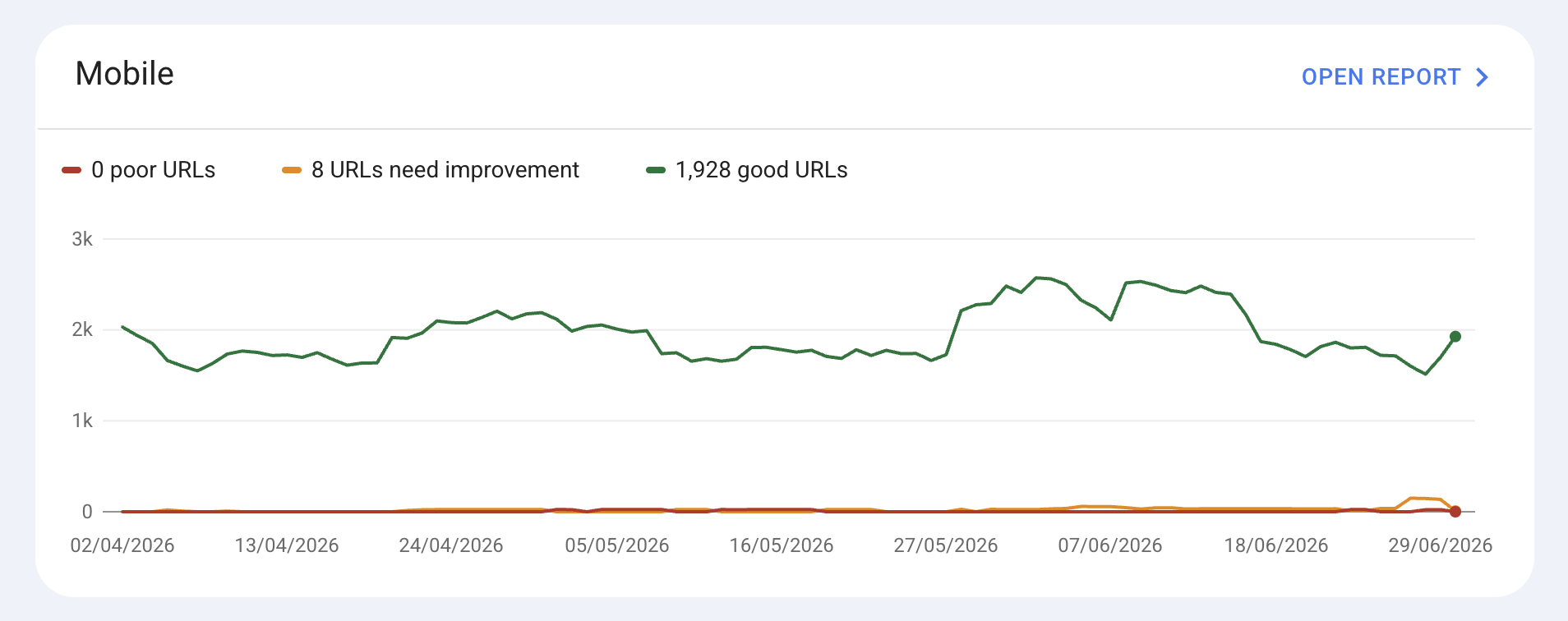
If you are running or planning a serious B2B eCommerce operation, the frontend, the bit your customers actually touch, is where a lot of buying decisions are quietly won or lost. This is the part of the stack that has changed most in the Magento world over the last few years, and the reason is a theme called Hyvä.
Hyvä replaced the way Magento storefronts are built. Instead of the heavy, ageing default frontend, it uses a lean modern approach (Tailwind CSS and Alpine.js) that strips out an enormous amount of weight and gives you a genuinely fast, responsive storefront. For B2B, where catalogues are large, that speed is not a vanity metric. It is the difference between a buyer completing a reorder and giving up.
Pair that frontend with Magento Open Source and the combination is hard to beat for B2B: a mature, capable platform you pay no licence fee for, where you own your own destiny, running a modern storefront that can go toe to toe with anything on speed. You are not renting your platform, you are not locked into a vendor's roadmap, and you can build precisely the B2B experience your business needs. Here is why that works so well, with examples from three of our own clients doing it today.
Magento's default frontend, Luma, has aged. It carries a lot of weight: more than 200 front-end dependencies where Hyvä has two, Tailwind CSS and Alpine.js. Hyvä's own figures put a typical page at around 0.2 MB against Luma's 1 MB. You feel that difference as a shopper, and your customers feel it as buyers.
Why should you care beyond bragging rights about page speed? Because the link between speed and money is one of the better-evidenced things in eCommerce. Google and Deloitte's Milliseconds Make Millions study found that a 0.1 second improvement in mobile load time lifted retail conversions by 8.4% and average order value by 9.2%. Those figures come from retail, but the principle carries straight into B2B: a faster storefront is a more usable one, and a more usable one converts.
Hyvä is not a silver bullet, though. It gives you a much faster starting point, but it does not guarantee a perfect score. Real-world Core Web Vitals still depend on your hosting, your images and how disciplined the build is. A specialist analysis in early 2025 found around half of Hyvä stores passing Core Web Vitals, against roughly a quarter of standard Magento stores. Better baseline, yes. Guaranteed success, no. The work still matters.
The bigger draw for a B2B business is control as well as cost. Because Magento Open Source has no platform licence fee, you are not renting the right to trade. You own the platform, you own your data, and you are free to shape it around your systems and your ambitions rather than around a vendor's release schedule or pricing tier. When your requirements change, the platform can change with them, without a licence renegotiation.
That does not make it free to run. You still need good hosting, a capable development partner and ongoing maintenance, and those are the costs that actually matter. But with no annual platform licence on top, more of your budget goes into the integrations, performance and B2B features specific to your business.
Magento Open Source does not include the native B2B suite, the company accounts, shared catalogues, requisition lists and quote tools that come built into Adobe Commerce. On Open Source you build those capabilities with a mix of extensions and custom development.
That sounds like a drawback, and sometimes it is, but in practice it is also where a lot of the value sits. Most B2B operations have requirements that do not fit a standard module anyway, and building deliberately around your actual ordering process tends to produce something better than a generic feature set. The three clients below are all examples of exactly that.
Shopify is worth mentioning, because it has moved in the other direction. Shopify now offers its core B2B features, including up to three active catalogues (effectively three price lists), on its standard plans rather than reserving them for Plus. For a business with a handful of wholesale accounts on similar terms, that may well be enough. But the moment you need more than three catalogues, or customer-specific pricing assigned directly to individual companies, you are into Shopify Plus and its monthly platform fee. With Magento Open Source there is no such ceiling and no licence tier to jump up to. You build the pricing structure your business actually needs.
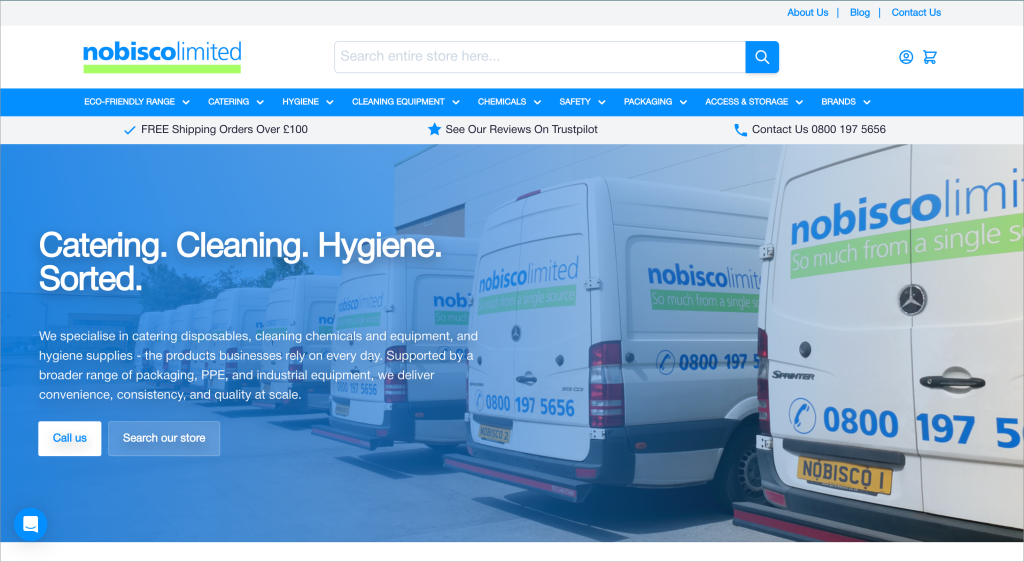
Nobisco came to us wanting better service and fresh ideas for their Magento Open Source store. We built them a new Hyvä frontend, then turned to the operational side. They already had an OGL prof.ITplus ERP integration in place, so we took over its support and extended it, keeping products, stock, pricing and order updates in sync between Magento and the ERP. We also added a punchout solution, so their customers can log in through their own procurement system, see their specific products and price lists, and buy, plus requisition lists for fast repeat ordering. That is the kind of B2B capability you assemble rather than switch on, and it works.
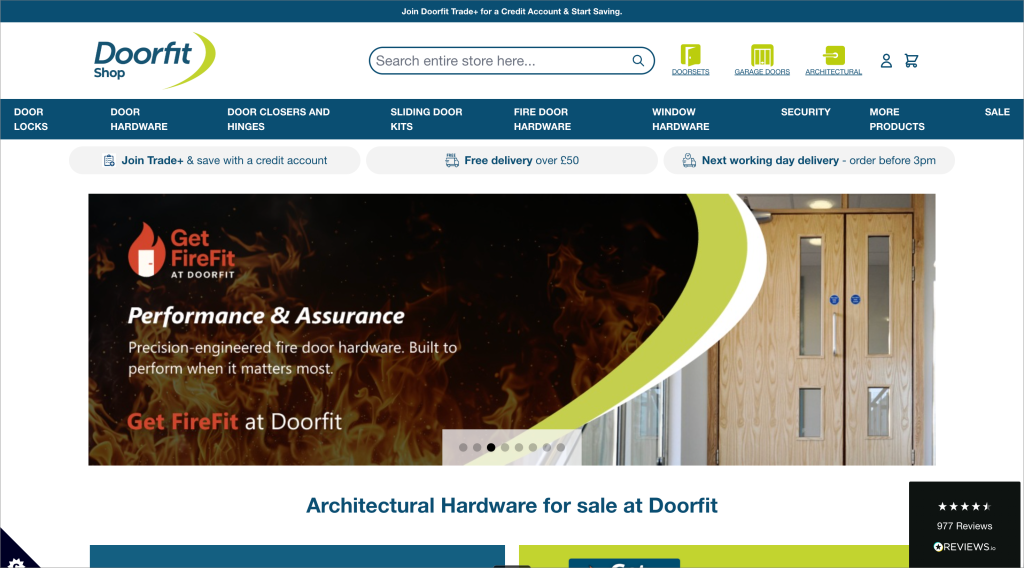
Doorfit, an architectural ironmongery business, needed to grow online across both trade and retail. We migrated them from Magento 1 to Magento 2 with a Hyvä frontend, and built a separate trade site for buying on account, using Magento's customer groups and catalogue price rules alongside custom customer and order attributes. It connects to Microsoft Dynamics 365 Business Central for stock, pricing and lead times, with orders mapped to each customer's Business Central account and tracking flowing back into Magento.

Flying Spares supply parts for historic Rolls-Royce and Bentley cars, with a catalogue of around 240,000 products. When their expansion into new markets called for a dedicated US presence, Magento's multi-store setup gave us the opportunity to build that US site on a new Hyvä theme, replacing the older Luma frontend and giving American customers a faster, more local experience to market from. Behind it sits real-time search via Doofinder across that enormous catalogue, ERP integration and a part finder built for the way their customers actually search.
If your B2B storefront feels slow, or you are planning a new build and want a modern, fast frontend on a platform you actually own, Magento Open Source with Hyvä deserves a serious look. You get a mature, well-supported platform, a storefront that competes on speed with anything out there, and the freedom to build the B2B experience your customers need rather than the one a licence tier allows.
One thing matters more than any of this: we are genuinely platform agnostic. Magento Open Source with Hyvä is a brilliant fit for a lot of B2B businesses, but it is not the right answer for everyone. The right platform is the one that matches your systems, your ambitions and your budget, and sometimes that is Adobe Commerce or Shopify. If you would like to think it through with someone who will tell you honestly either way, have a look at our B2B eCommerce and Magento development work, or just get in touch and ask me directly.